
Deering Bridge

I was in Chicago a few days ago, and while it wasn’t a photography trip, I couldn’t pass up the opportunity to see this bridge. I discovered it by looking at Google maps - there was this massive railroad abridge, and two other street bridges very close together. I forget why I was looking at the map. I guess I was just following my likely route from one place to another. But I’m glad I found it!
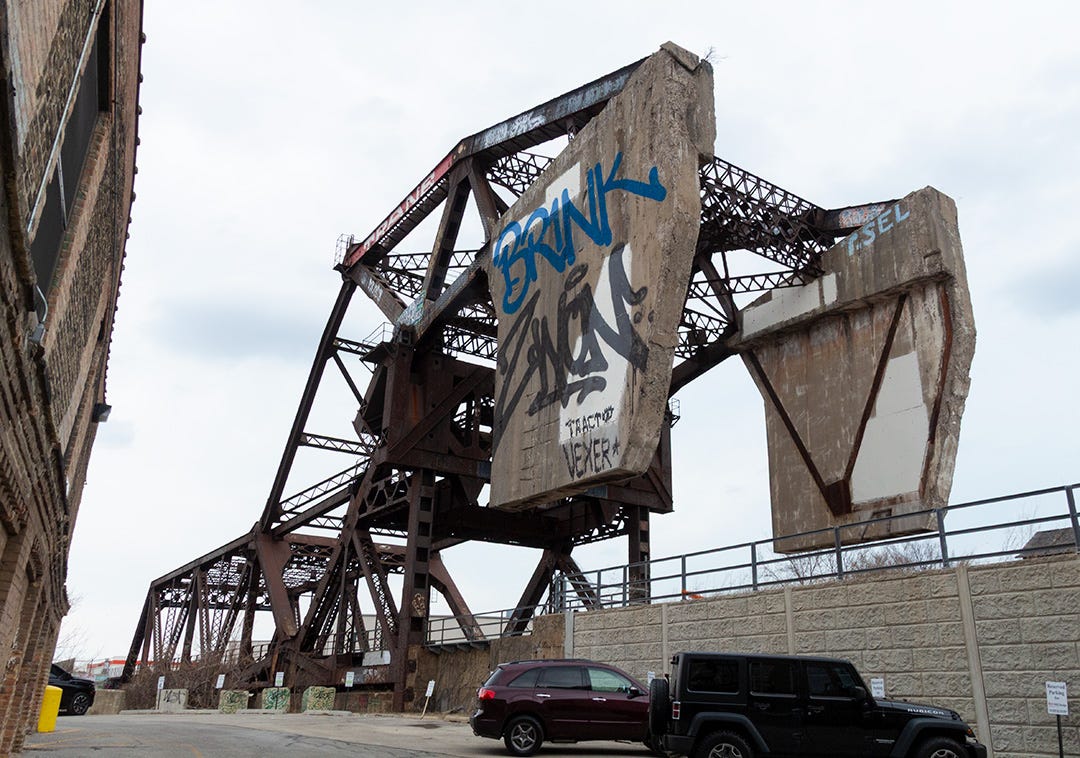
It’s hard to get a feel for it from my photos. This is a very wide-angle view, which makes the near end look huge, and the far end look small, but it really was kinda like that. The span is not a very long one, but it was built to handle three tracks across. Those counterweights are outside of the tracks, which makes it feel even wider.
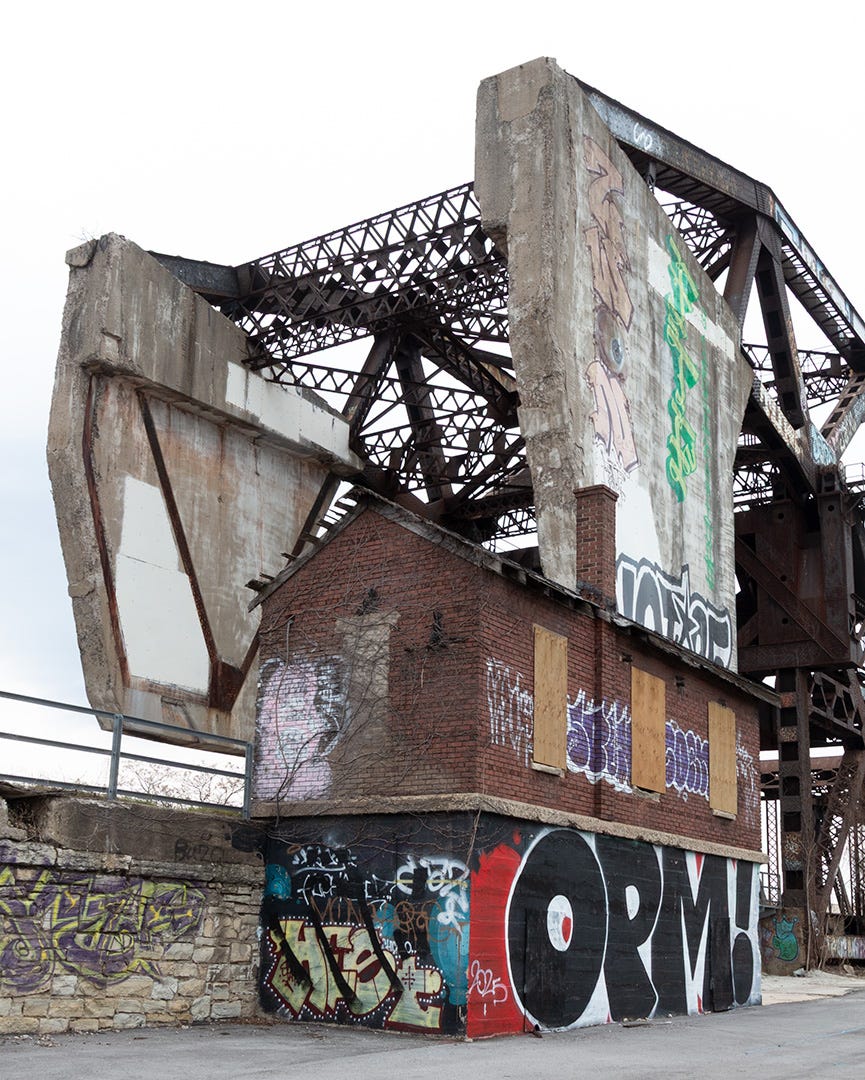
It was built in 1916, and powered by a gasoline engine. Its predecessor was an 1887 steam-powered swing bridge carrying two tracks. There’s an interesting story about the construction of this bridge.
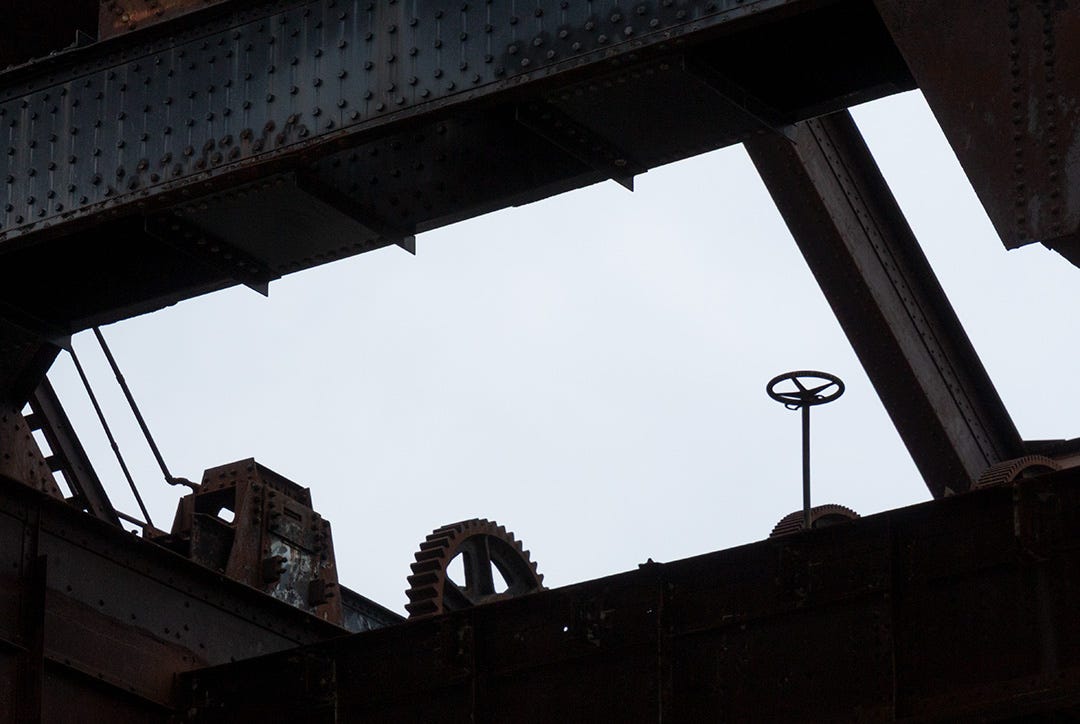
This was a major route for the Chicago & North Western Railroad going north, and they couldn’t stop rail traffic for very long. So they built this bridge in the open position while the old bridge was still in service. Normally, the concrete counterweights are over the track, and when the bridge goes up, the weights come down, blocking the track. They couldn’t block the tracks during construction, which is why the counterweights are outside the rail clearance. Once construction was nearly complete, rail service was cut off, and they demolished the old bridge to the point that they could lower the new one into place and finish the connections on the far side of the river. Rail service was interrupted for just under 20 hours.
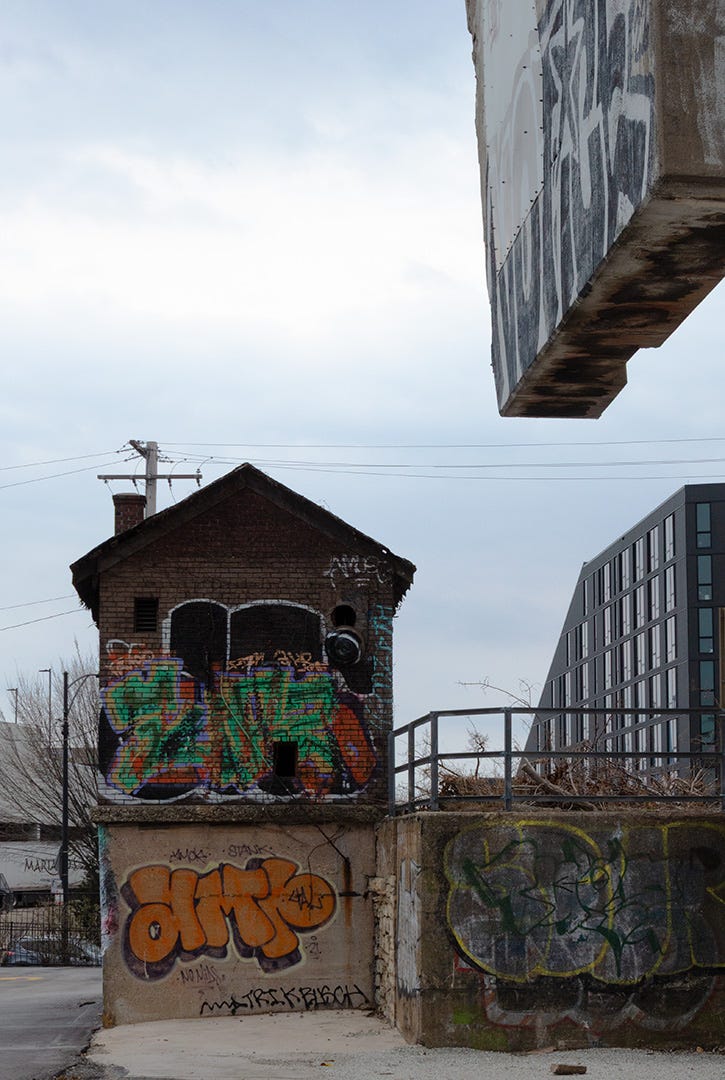
The bridge was named for Charles Deering, who was on the board of directors of C&NW, and also Deering Harvester was located nearby.
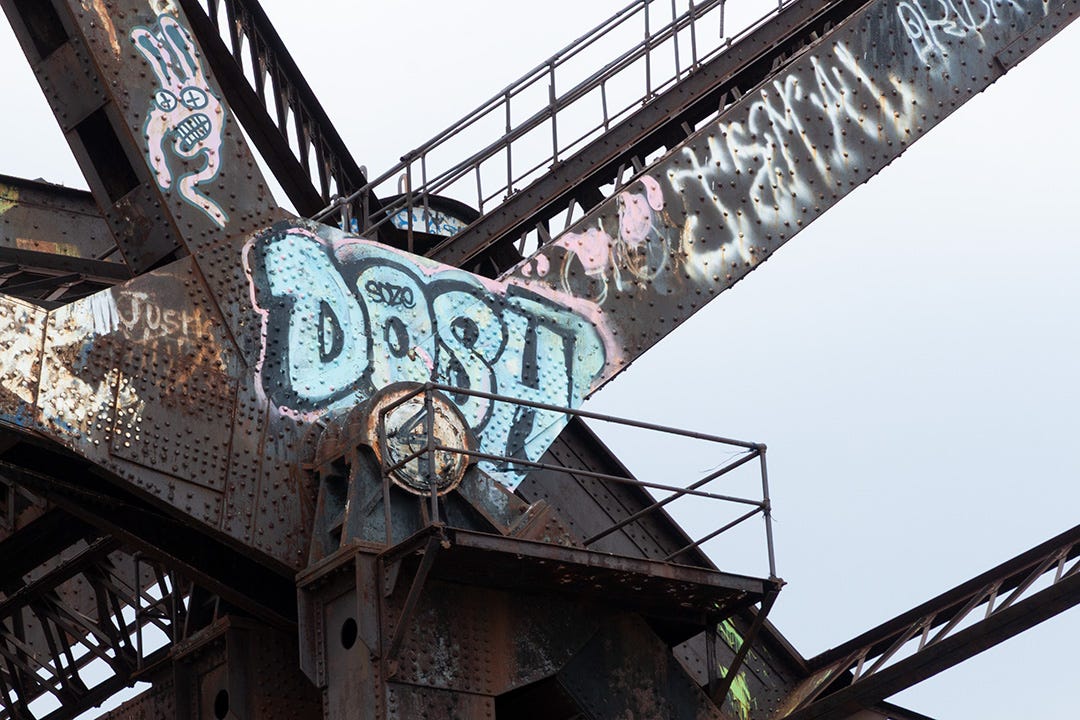
Also interesting, the ends of the bridge are skewed - not perpendicular to the tracks. Since one side of the span is longer than the other, the counterweights are not the same weight. They’re the same size, but they mixed more aggregate into the concrete of one side, to make it 168 pounds per cubic foot, compared to 160 pounds on the other side.
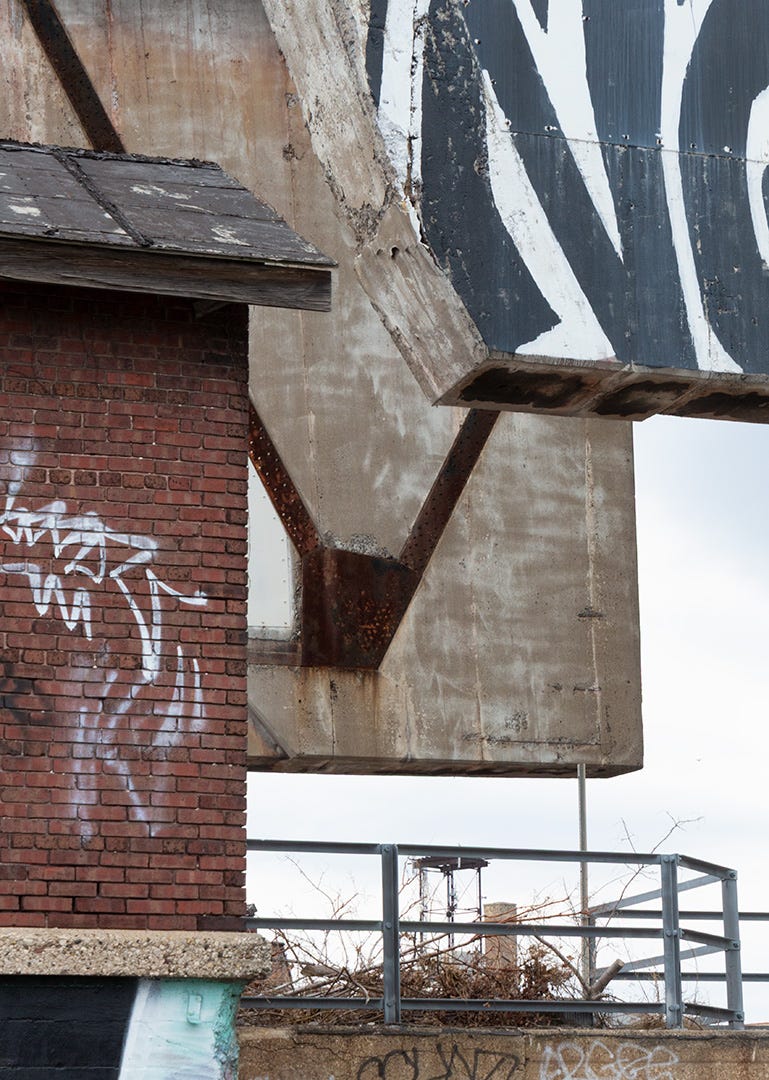
I want to know how they got those counterweights tagged. The paint is twenty to forty feet up.
I would have guessed that the bridge operation is still maintained even though there is no river traffic anymore, and no reason to lift it. But looking at satellite view, it doesn’t appear there is a gap on the bridge deck at the far end. So I think it can be considered nonoperational. This is the farthest north lift bridge on the river.
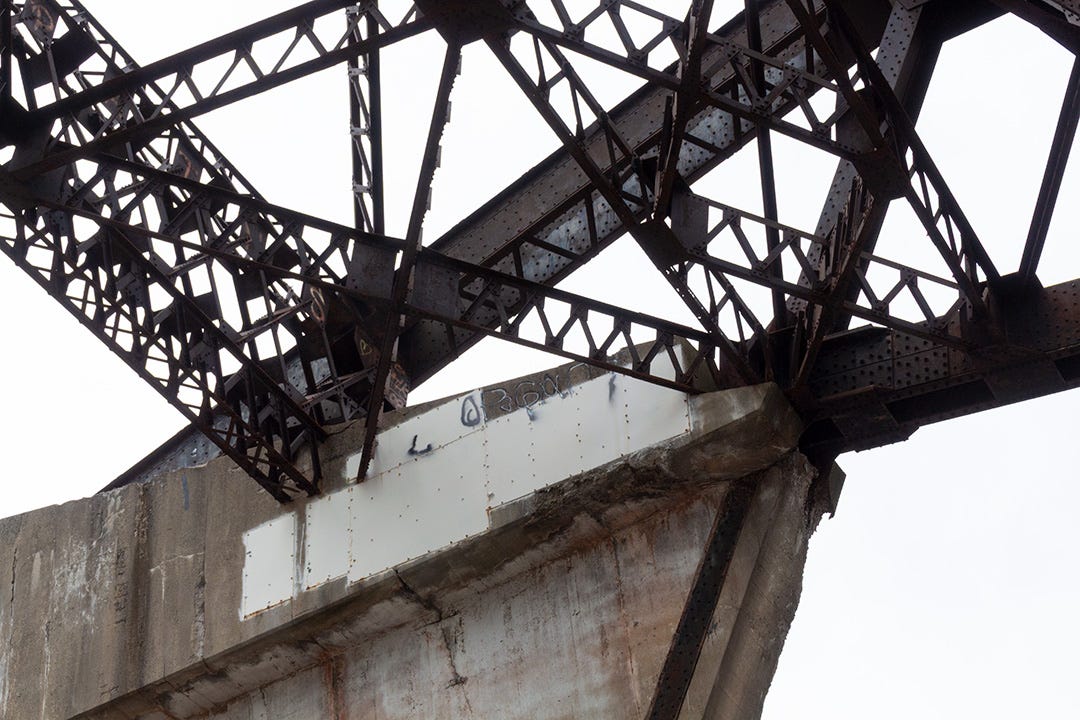
I wanted to climb up to the tracks and see the bridge more closely, but I didn’t because that’s trespassing. And the weather was unpleasant.